
As the cost of a degree climbs, prospective students want evidence of where it leads. Universities that can show real alumni outcomes will have the advantage.
A recent article by Kristin O’Donoghue and Dan Chiolan, Higher Ed’s Existential Crisis, makes a confronting point about the economics facing higher education.
In the US, institutions are dealing with more than AI. The population of 18-year-olds is shrinking, participation rates are declining and financial pressure is rising.
What has happened to the price of a degree
Since 1983, according to Bureau of Labor Statistics Consumer Price Index data:
- Housing costs have risen 261%
- Medical care costs have risen 505%
- College tuition has risen 914%
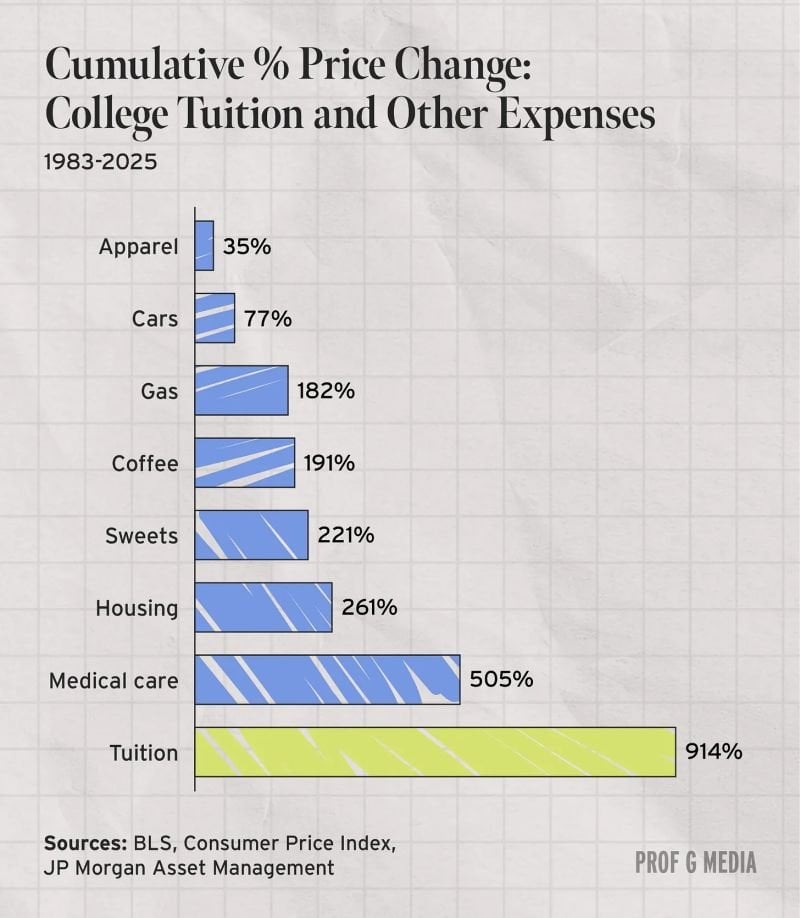
Sources: BLS, Consumer Price Index; JP Morgan Asset Management. Chart: Prof G Media.
And yet, the article notes, the college wage premium has barely moved since 2000.
For prospective students, particularly international students making one of the largest financial decisions of their lives, the question is becoming simple:
“If I spend this much on a degree, where will it actually take my career and earnings?”
What universities will need to show
At Cturtle, we believe this will change student recruitment. Universities will need to move beyond rankings, campus imagery, testimonials and broad employability claims. Students will expect transparent, course-level evidence of graduate and alumni outcomes:
- Where do graduates work?
- What jobs do they move into?
- Which employers hire them?
- Where do their careers take them geographically?
- What do they earn?
- How do those outcomes change over time?
This is not an argument that university isn’t worth the cost
It is an argument that, as costs rise, universities need to get much better at showing which degrees deliver value, for which students, and what that value looks like after graduation.
That is why we believe the future of international student recruitment will be data-driven, outcomes-focused and transparent. Universities that can show the value of their degrees with real alumni evidence will have a growing advantage over those still asking students to trust the promise.
Proof beats promise.
What this looks like at the University of York
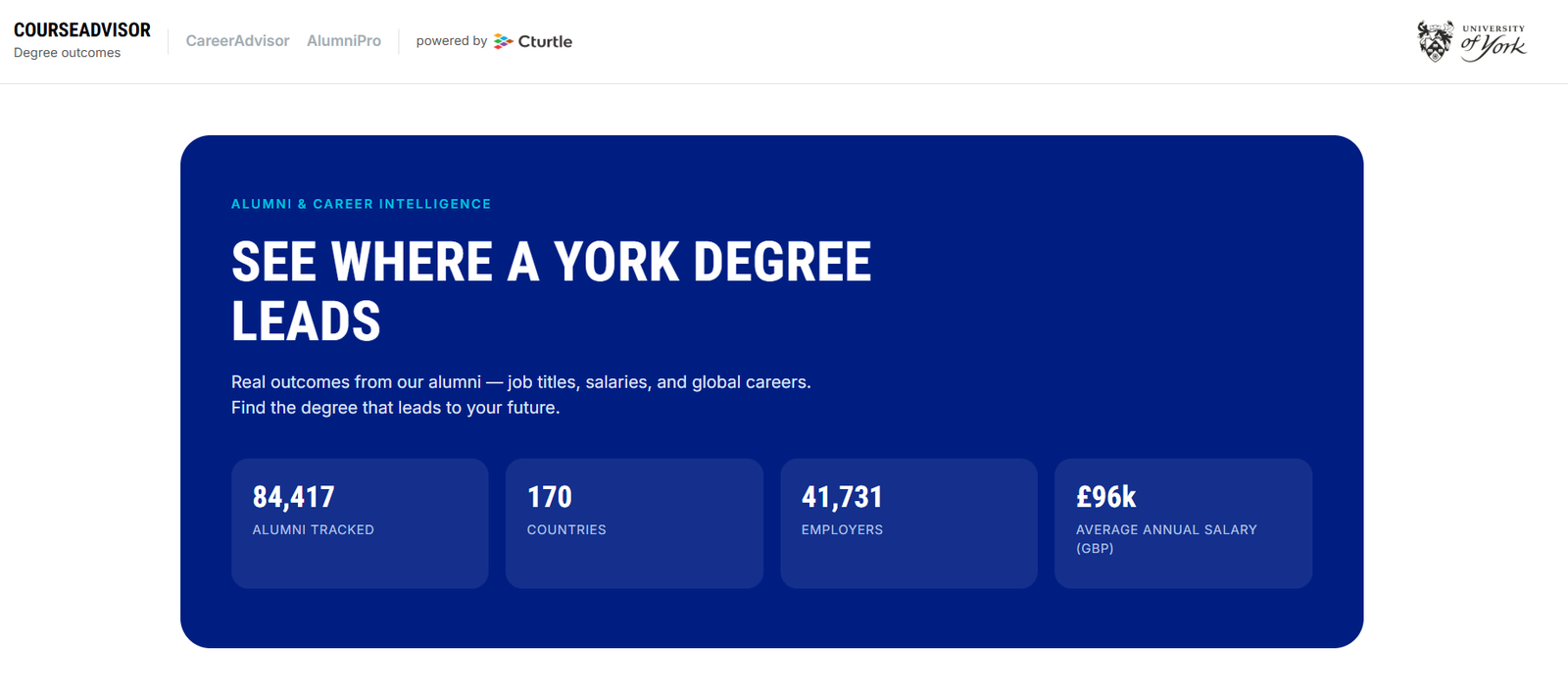
This is what we are building with CourseAdvisor. The University of York in the UK has linked 301 degree programmes to the employment outcomes of 84,417 alumni, across 170 countries and 41,731 employers, at an average salary of £96k. Prospective students can search by degree, employer, industry and job function.
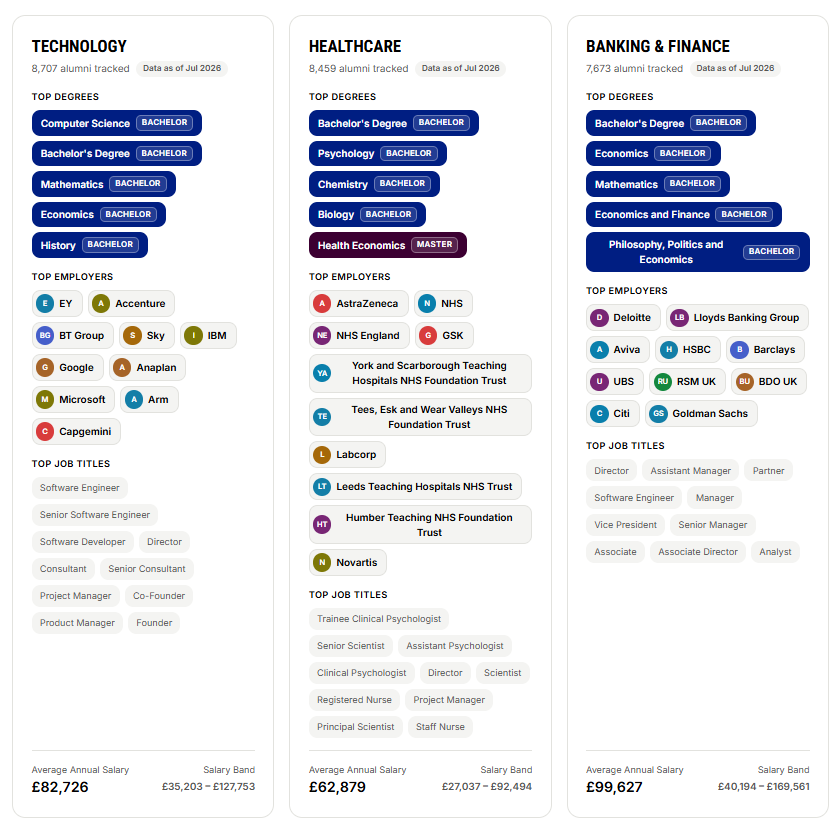
Results are grouped by sector. Under Banking & Finance, for example, 7,673 alumni are tracked, with employers including Deloitte, HSBC and Lloyds Banking Group, at an average salary of £99,627.
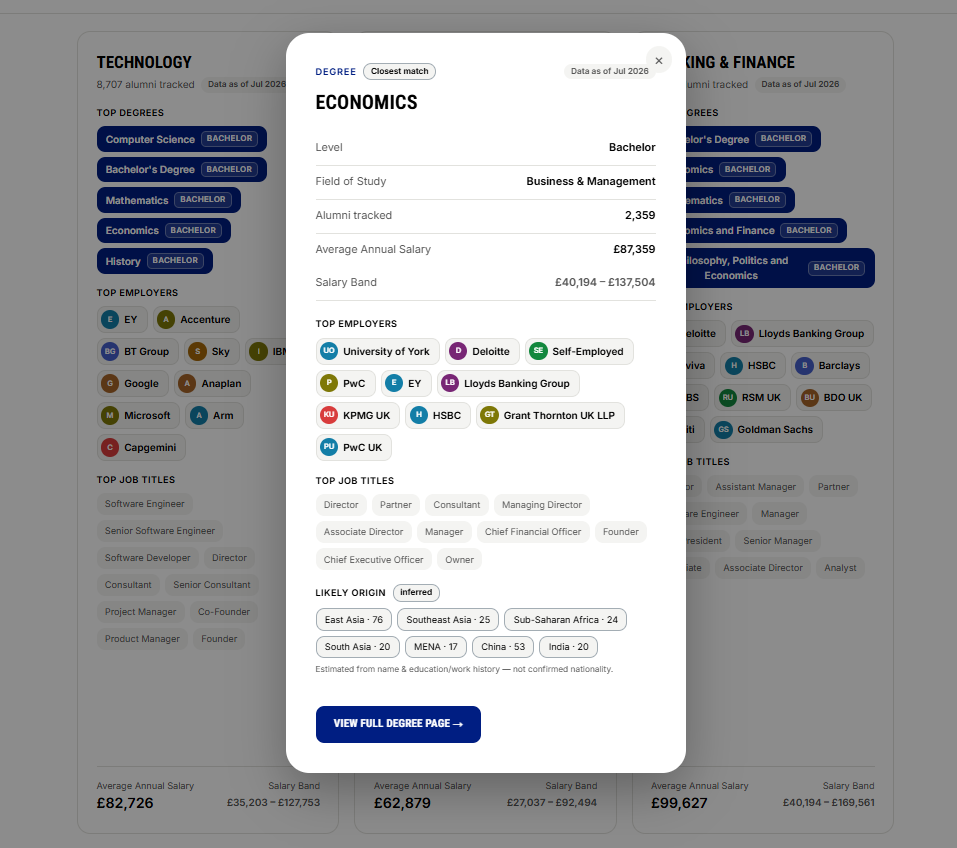
Students can go down to a single degree. For York Economics, 2,359 alumni are tracked, with an average salary of £87,359 and a salary band of £40,194 to £137,504. Top employers include Deloitte, PwC and EY. A “View full degree page” link takes the student to the degree itself.
The University of Birmingham uses CourseAdvisor too, with 289 programmes linked to 146,737 alumni outcomes. Explore the Birmingham platform.
Read the original article
The full article from Kristin O’Donoghue and Dan Chiolan is well worth reading: Higher Ed’s Existential Crisis, Prof G Media.
See where a York degree leads
Search 84,417 University of York alumni outcomes across 301 programmes, live.